Aller au contenu
Fiches de sécurité

Acute Tox. 1

Acute Tox. 1 : Toxicité aiguë

Acute Tox. 1 est un code de classe et de catégorie de danger du règlement CLP. Il relève de la classe de danger « Toxicité aiguë ». Ce site présente 72 substances de l'annexe VI ainsi classées.

Quelles phrases H ces substances portent-elles le plus souvent ?

H300
Mortel en cas d'ingestion. 66 substances
H310
Mortel par contact cutané. 65 substances
H400
Très toxique pour les organismes aquatiques. 44 substances
H330
Mortel par inhalation. 42 substances
H410
Très toxique pour les organismes aquatiques, entraîne des effets néfastes à long terme. 35 substances
H372
Risque avéré d'effets graves pour les organes <indiquer tous les organes affectés, s'ils sont connus> à la suite d'expositions répétées ou d'une exposition prolongée <indiquer la voie d'exposition s'il est formellement prouvé qu'aucune autre voie d'exposition ne conduit au même danger>. 9 substances
H373
Risque présumé d'effets graves pour les organes <ou indiquer tous les organes affectés, s'ils sont connus> à la suite d'expositions répétées ou d'une exposition prolongée <indiquer la voie d'exposition s'il est formellement prouvé qu'aucune autre voie d'exposition ne conduit au même danger>. 8 substances
H314
Provoque de graves brûlures de la peau et de graves lésions des yeux. 7 substances

Quelles substances sont classées Acute Tox. 1 ?
NomN° CASMention d'avertissementPictogrammes
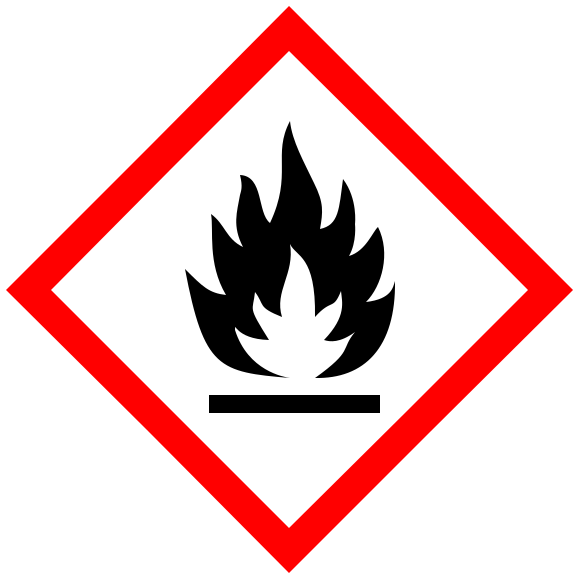
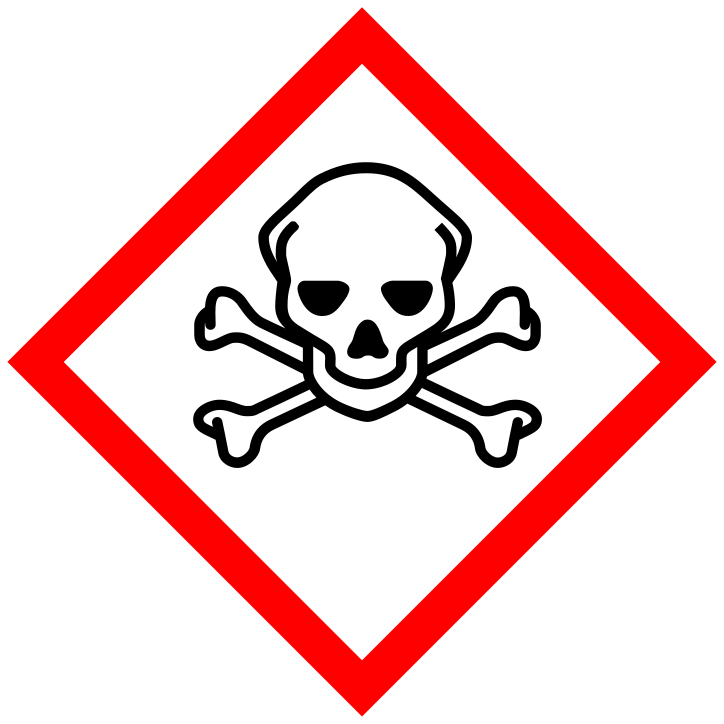
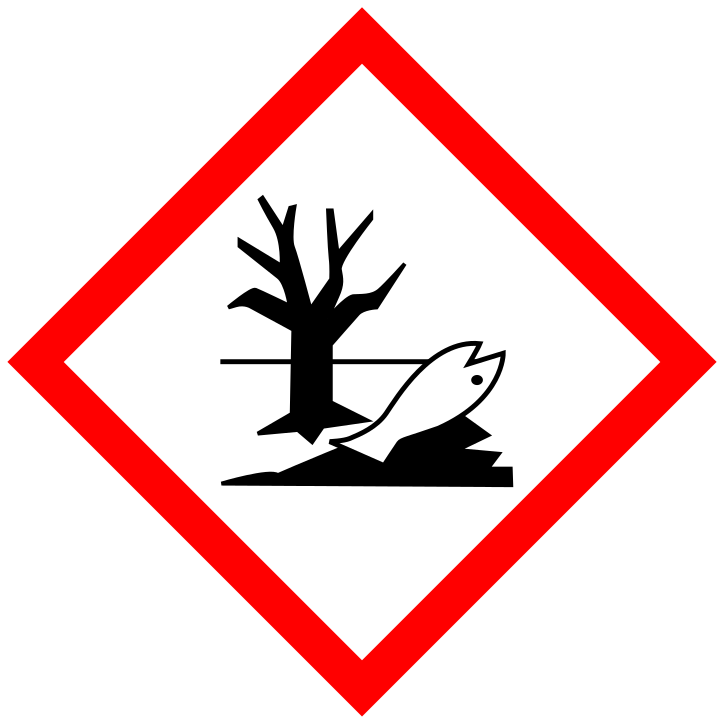
1,1,2,2-tétrachloroéthane 79-34-5 Danger GHS06GHS09
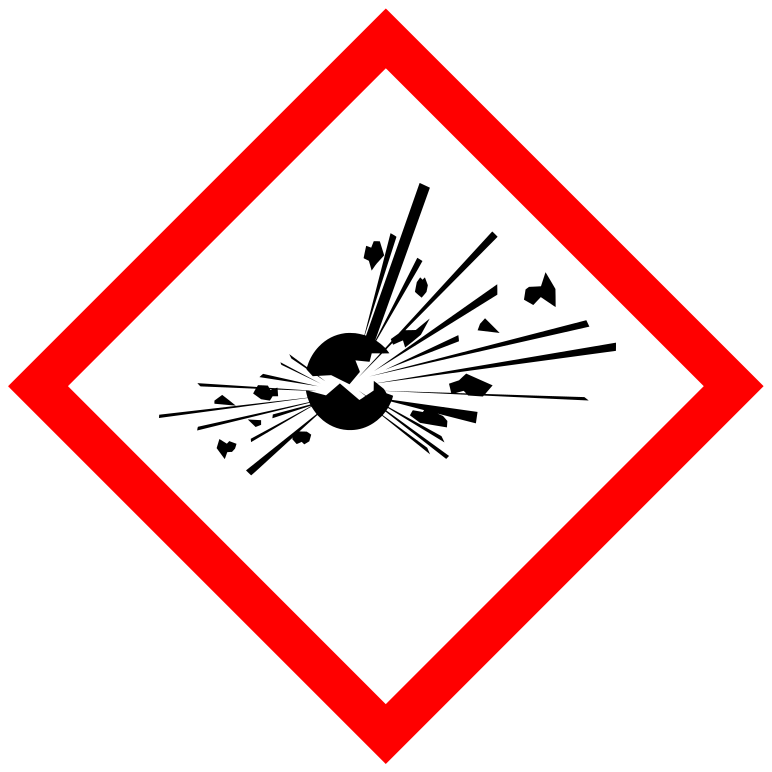
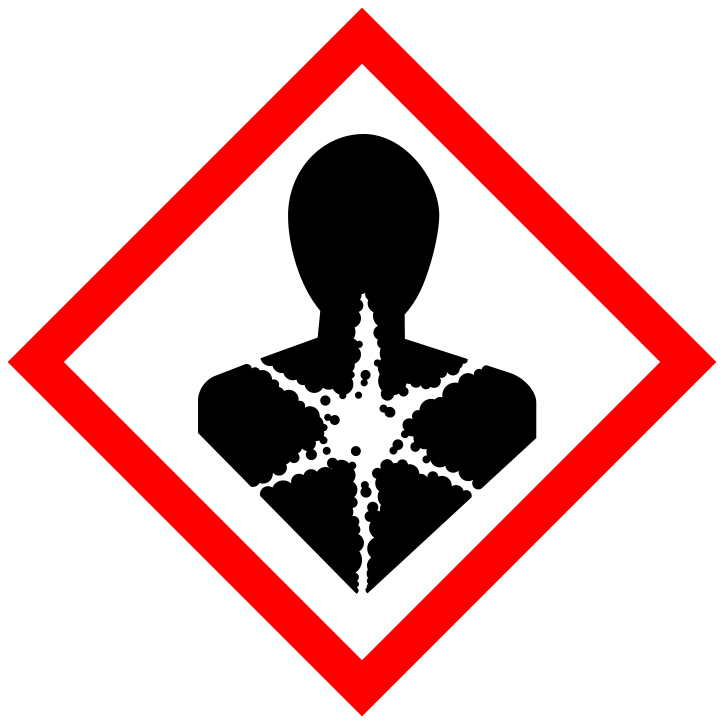
1,3,5-trinitrobenzène 99-35-4 Danger GHS01GHS06GHS08GHS09
2-chloroéthanol 107-07-3 Danger GHS06
2-hydroxy-2-méthylpropionitrile 75-86-5 Danger GHS06GHS09
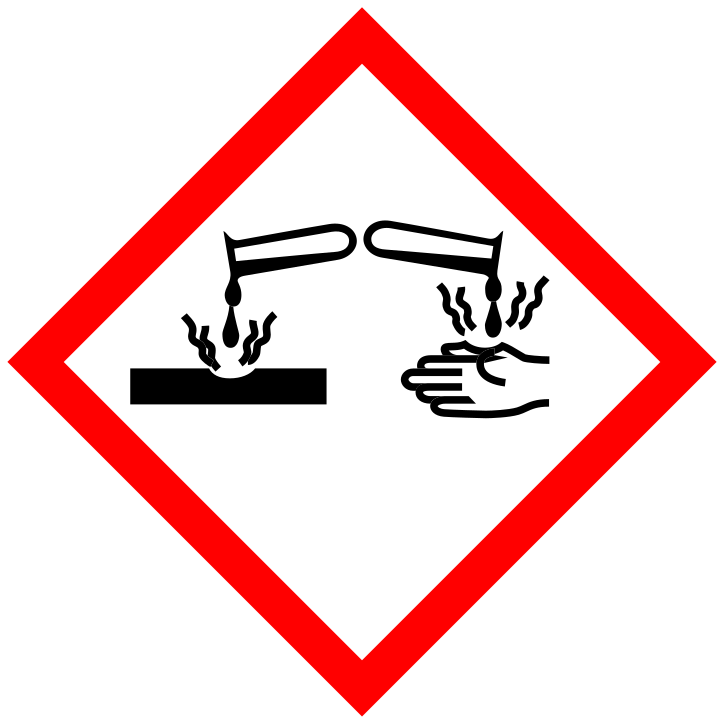
Acide hydrofluorique à …% 7664-39-3 Danger GHS06GHS05
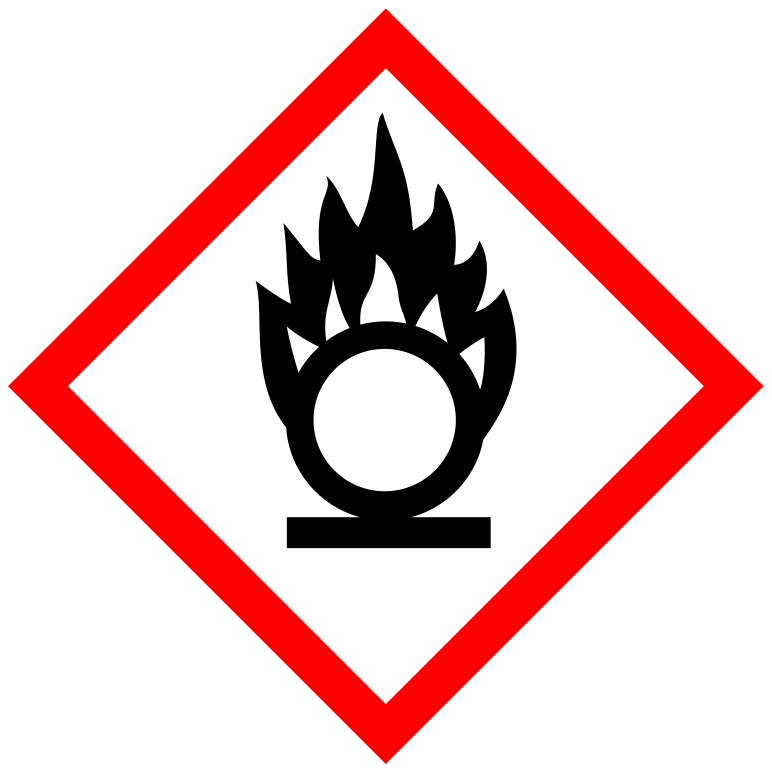
Acide nitrique …% 7697-37-2 Danger GHS03GHS06GHS05
Acroléine 107-02-8 Danger GHS02GHS06GHS05GHS09
Bis(2-chloroéthyl)éther 111-44-4 Danger GHS06GHS08
Brodifacoum (ISO) 56073-10-0 Danger GHS08GHS06GHS09
Bromadiolone (ISO) 28772-56-7 Danger GHS08GHS06GHS09
Bromoacétate d'éthyle 105-36-2 Danger GHS06
Chlorméphos (ISO) 24934-91-6 Danger GHS06GHS09
Chlorophacinone (ISO) 3691-35-8 Danger GHS08GHS06GHS09
Cyanure d'hydrogène à ....% 74-90-8 Danger GHS06GHS09
Dieldrine (ISO) 60-57-1 Danger GHS06GHS08GHS09
Diméfox (ISO) 115-26-4 Danger GHS06
Diméthylmercure 593-74-8 Danger GHS06GHS08GHS09
Dinitrate d'oxydiéthylène 693-21-0 Danger GHS01GHS06GHS08
Dinitrate d'éthylène 628-96-6 Danger GHS01GHS06GHS08
Disulfoton (ISO) 298-04-4 Danger GHS06GHS09
DNOC (ISO) 534-52-1 Danger GHS06GHS08GHS05GHS07GHS09
Fluoroacétate de sodium 62-74-8 Danger GHS06GHS09
Fluorure d'hydrogène 7664-39-3 Danger GHS06GHS05
Phorate (ISO) 298-02-2 Danger GHS06GHS09
Phosphine 7803-51-2 Danger GHS02GHS04GHS06GHS05GHS09
Phosphure d'aluminium 20859-73-8 Danger GHS02GHS06GHS09
Phosphure de calcium 1305-99-3 Danger GHS02GHS06GHS05GHS09
Phosphure de magnésium 12057-74-8 Danger GHS02GHS06GHS09
Scopolamine 51-34-3 Danger GHS06
Strychnine 57-24-9 Danger GHS06GHS09
Trinitrate de glycérol 55-63-0 Danger GHS01GHS06GHS08GHS09
Tétraoxyde d'osmium 20816-12-0 Danger GHS06GHS05
Éthoprophos (ISO) 13194-48-4 Danger GHS06GHS09
Éthylèneimine 151-56-4 Danger GHS02GHS06GHS08GHS05GHS09
2-chloro-1,3,5-trinitrobenzène 88-88-0 Danger GHS01GHS06GHS09
Abamectine (association d'avermectine B1a et d'avermectine B1b) (ISO) 71751-41-2 Danger GHS06GHS08GHS09
Cyanure de cadmium 542-83-6 Danger GHS06GHS08GHS09
Difénacoum (ISO) 56073-07-5 Danger GHS08GHS06GHS09
Diféthialone (ISO) 3-[3-(4′-bromobiphényl-4-yl)-1,2,3,4-tétrahydronaphthalèn-1-yl]-4-hydroxy-2H-1-benzothiopyran-2-one 104653-34-1 Danger GHS08GHS06GHS09
Diméthylcarbamate de 1-isopropyl-3-méthylpyrazol-5-yle isolane 119-38-0 Danger GHS06
Dinitrobenzène 25154-54-5 Danger GHS06GHS08GHS09
Déméton 8065-48-3 Danger GHS06GHS09
Déméton-O (ISO) 298-03-3 Danger GHS06GHS09
Déméton-S (ISO) 126-75-0 Danger GHS06
Fensulfothion (ISO) 115-90-2 Danger GHS06GHS09
Flocoumafen (ISO) 90035-08-8 Danger GHS08GHS06GHS09
Fluénétil (ISO) 4301-50-2 Danger GHS06
Fonofos (ISO) 944-22-9 Danger GHS06GHS09
Fosthiétan (ISO) 21548-32-3 Danger GHS06
IPSP 5827-05-4 Danger GHS06GHS09
Isobenzan (ISO) 297-78-9 Danger GHS06GHS09
Isodrine 465-73-6 Danger GHS06GHS09
Méphospholan (ISO) 950-10-7 Danger GHS06GHS09
Mévinphos (ISO) 7786-34-7 Danger GHS06GHS09
Phosacétime (ISO) 4104-14-7 Danger GHS06GHS09
Phosphate de 4-(méthylthio)phényle et de diméthyle 3254-63-5 Danger GHS06
Phospholan (ISO) 947-02-4 Danger GHS06
Phosphorodithioate de S-[2-(éthylsulfinyl)éthyle] et de O,O-diméthyle 2703-37-9 Danger GHS06GHS09
Phénylphosphonothioate de O-éthyle et de O-4-nitrophényle EPN 2104-64-5 Danger GHS06GHS09
Potasan 299-45-6 Danger GHS06GHS09
Prothoate (ISO) 2275-18-5 Danger GHS06
Pyrazoxon 108-34-9 Danger GHS06
Schradane (ISO) 152-16-9 Danger GHS06
Sel d'ammonium du DNOC 2980-64-5 Danger GHS06GHS08GHS09
Sulfotep (ISO) 3689-24-5 Danger GHS06GHS09
TEPP (ISO) 107-49-3 Danger GHS06GHS09
Terbufos (ISO) 13071-79-9 Danger GHS06GHS09
Thiofanox (ISO) 39196-18-4 Danger GHS06GHS09
Thionazine (ISO) 297-97-2 Danger GHS06
Triamiphos (ISO) 1031-47-6 Danger GHS06
Téfluthrine (ISO) 79538-32-2 Danger GHS06GHS09
Warfarine (ISO) 81-81-2 Danger GHS08GHS06GHS09

Questions fréquentes

Que signifie Acute Tox. 1 ?

Acute Tox. 1 est un code de classe et de catégorie de danger du règlement CLP. Il relève de la classe de danger « Toxicité aiguë ».

Combien de substances sont classées Acute Tox. 1 ?
Ce site présente 72 substances de l'annexe VI ainsi classées.